Diagnostic Discovery for Endometriosis
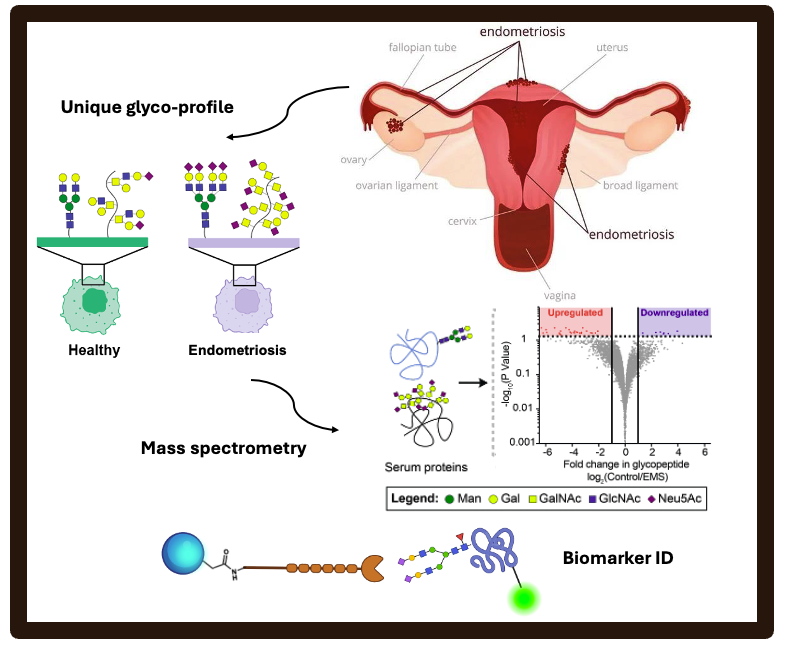
Endometriosis is an inflammatory disease that causes chronic pain and dysmenorhhea, and can result in reduced or total loss of fertility while also carrying an increased risk for the development of all gynecological cancers. While 1 out 10 women have endometriosis, the time to obtain this diagnosis takes 7 years on average.
This is unacceptable.
My research investigates sugar patterns, what we call the “glyco-profile”, of endometriosis patient serum. Using special ionization techniques for mass spectrometry and intensive data analysis of these samples, we can form a robust picture of a unique landscape of the glycans unique to endometriosis. Using this strategy, we identify “glyco-signatures” correlated to the disease.
However, this is only part of the puzzle. I am simultaneously developing a one-pot, high-throughput, and highly multiplexed assay to identify specific glycoproteins in complex, heterogenous mixtures, such as patient samples. Our goal is a holistic characterization of the previously unknown endometriosis glycoprofile, then to identify and verify a unique biomarker in patient serum to serve as a non-invasive diagnostic.
By significantly reducing the gap between symptoms and diagnosis, women can receive early intervention to improve treatment plans and health outcomes, reduce pain, and improve overall quality of life for all endometriosis patients.
Small Molecule Glycan Therapies and Biological Probes
Iminosugars are a class of sugar mimicking molecules that target glycosylation enzymes: enzymes essential for building and breaking down complex sugar structures throughout the body. Nearly every cell and protein are decorated with these sugars which are key in cell signaling, homeostasis, and disease pathogenesis. This is why glycosylation enzymes have long been considered high value therapeutic targets. In fact, critical therapies against influenza, cancer, and genetic disorders all come from a class of sugar mimicking molecules known as glycomimetics.
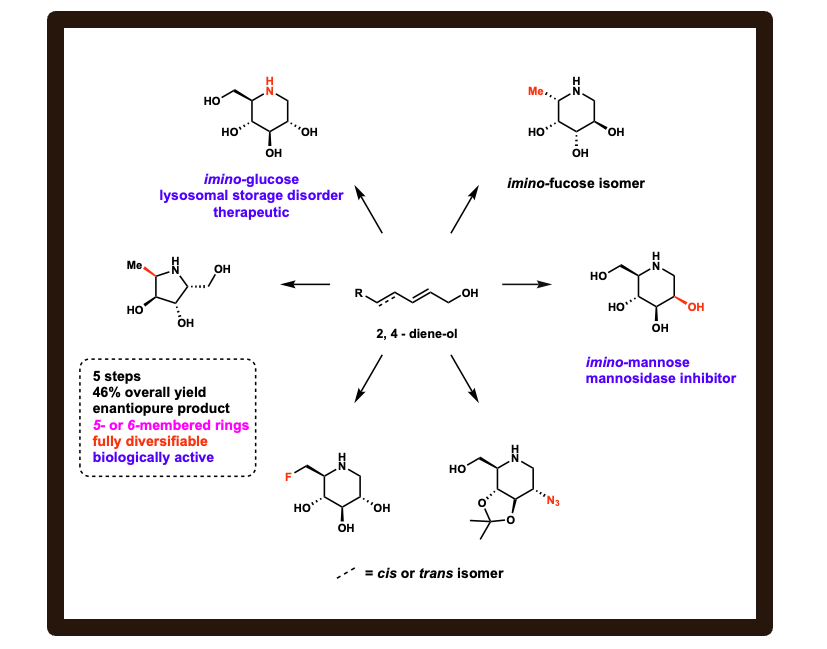
The particular class of glycomimetics I study are iminosugars. While researchers have proposed iminosugar compounds as promising treatments for pressing viral diseases, congenital disorders of glycosylation, and cancer, drug discovery has fallen short- largely due to the lack of access to these structures.
My research aims to solve this problem by designing the first rapid, scalable, and selective synthesis of bioactive iminosugars to effectively increase the public’s access to these valuable therapeutic compounds.
My methodology is the first of its kind, allowing selective modification of the iminosugar scaffold: a critical step in improving the compound’s treatment efficacy. Another benefit of my strategy is the ability to start with a single, commercially available compound, and with minor alterations of the chemical conditions you can create whichever iminosugar you desire, providing easy access to compounds tailored to your specific drug target.
This work has also revealed the underlying mechanism that drives the energetic preferences for creating these 5- and 6- membered chemical rings- critical motifs in a huge number of small molecule drugs. Understanding this driving force allows us create whichever structure we desire with complete selectvity. This lays the groundwork to access high value therapeutic compounds in a new and easier way.
I am utilizing this strategy in new projects to create novel biological probes, using them to learn how glycosylation enzymes modulate cellular signaling in our immune system.
Next Gen Immune Modulating Chimeric Therapies for Cancer
Ovarian cancer is the deadliest of all gynecological cancers, and more than 80% of ovarian cancer patients develop chemoresistance. These patients require alternative intervention, such as immune-based therapies, which are rapidly rising as a one of the most promising classes of ovarian cancer treatments. Whereas chemotherapy acts via nonspecific killing of both healthy and cancerous cells, immunotherapies engage and train the immune system, offering the potential for more durable and sustainable responses.
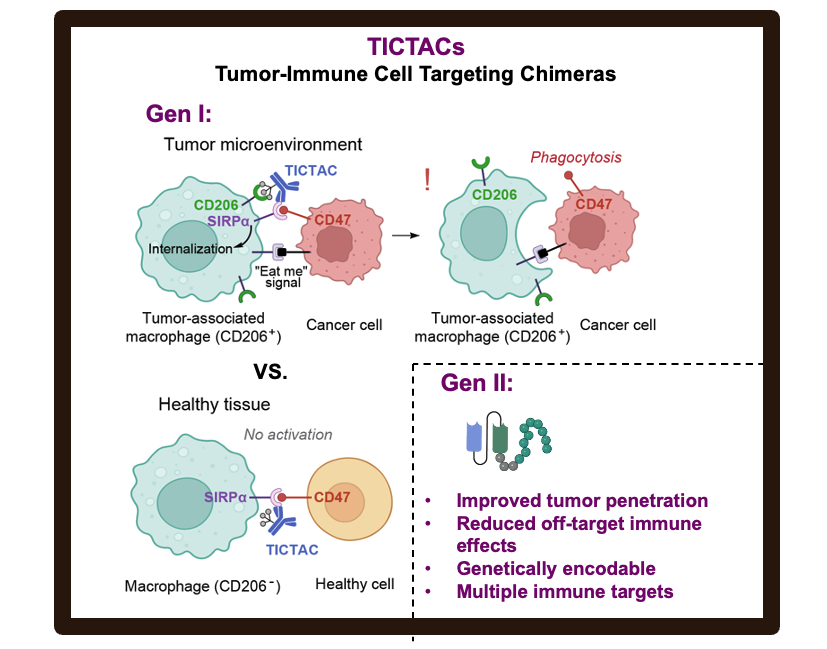
Introducing Tumor-Immune Cell Targeting Chimeras (TICTACs), a novel immunotherapy that selectively targets immune cells at the cancer tumor site and re-activates them to destroy cancer cells. This patented therapeutic strategy is unique in its ability to attenuate one of the biggest challenges facing immunotherapies today: systemic administration while attenuating off-target immune toxicity. That means TICTACs can circulate throughout the body and activate immune cells only at the tumor site, leaving healthy immune cells active, unaffected, and fighting for you.
While TICTACs stand as a ground breaking discovery in cancer therapy, I am advancing them towards the clinical trial pipeline. This includes the development of next generation of TICTACs that are optimized for solid tumor penetration, improved synthetic efficacy, and even further reduced off-target immune toxicity. These novel constructs maintain the targeting ability and medicinal efficacy of our first generation of immune therapies while offering a compact, genetically encodable, safer compound.
These expertly crafted structures are currently being engineered to target additional immune factors in an effort to build a therapeutic system that examines the dynamic immune landscape unique to ovarian cancer for improved efficacy while simultaneously re-sensitizing cancer cells to traditional chemotherapies.